
6 Brand Strategy Secrets Behind Every Iconic Fashion House
Balenciaga has become the first fashion house ever to join Substack’s native sponsorship programme. Balenciaga is directly gaining the endorsement of independent creators. It is the same, unique brand development strategy and mindset that helped Balenciaga step up as a fashion house in the first place. As disastrous as its 2022 “Gift Shop” Campaign has been, or as outlandish as its red carpet appearances are, Balenciaga has always recovered from its ups and downs and reclaimed its throne.
This is the nuts-and-bolts fashion brand building strategies of maisons de couture. Fashion houses stand for centuries. They are an integral part of the luxury goods industry, and the utopian world demands that they keep producing high-end fashion and do not fade in a few years like ordinary brands.
You could argue that they are under a little pressure. The global personal luxury goods market dipped from €350-360 billion in revenue in 2024 to €350 billion in 2024, obviously being dominated by economic headwinds. Yet the handful of iconic maisons have been there in past, survived it, and still command intense loyalty from consumers across every region of the world.
This blog will cover how these brands were formed, what set them apart, the bread-and-butter brand strategies for fashion companies and what makes people buy them and trust them even after marketing blunders.
How Were the Pioneering Maisons Established?
The hand of history was on the shoulders of Charles Frederick Worth, who founded House of Worth with a fashion brand mission and vision in 1858. He established the lead of haute couture, and what followed was a succession of maisons that defined luxury fashion brand marketing strategy for the next two centuries: Hermès, Louis Vuitton, Lanvin, and the houses that came after them.
But fashion houses were not fashion houses from the beginning. They had to get into the closets of the wealthiest people in the world. It was a difficult task.
And the answer was customisation.
The brand purpose of every luxury fashion house, from the very beginning, was to serve a few.
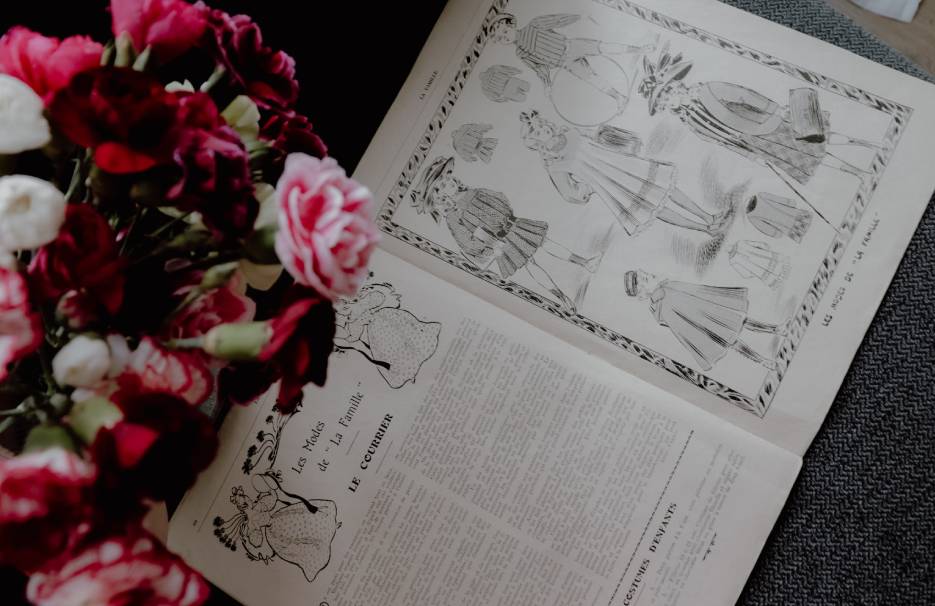
However, in the 1930s and 1940s, home sewing by machine and the fabric technologies rayon, lycra, nylon, which were so easily available, created an anomaly, the ready-to-wear. What had once been the exclusive attire of the elite became the language of the high street.
But fashion houses were still a breed apart. They were not complacent. The age, founding stories, and heritage of these maisons shaped the modern luxury positioning strategy, and helped them get their teeth into the expensive goods.
Till this day, they continue to put in hundreds of hours of fine craftsmanship. Louis Vuitton still makes custom luggage and leather goods in Paris. Hermès still produces saddles and bridles by hand in its workshops. The ultra-high-net-worth fashion consumer has never stopped commissioning customised work, and core has always, always been, the ateliers of the houses Worth inspired.
The Brand Strategy Secret Behind Every Iconic Fashion House
The brand development process for these maisons took shape with a clear sense of what the house stood for and who it was made for. Here are 6 iconic luxury fashion brand marketing + strategy secrets that fashion houses have subtly or loudly practised for years.
1. A futurist, big-picture roadmap
A fashion business strategy is built on an emotional-scape, a 3 to 7 years backcasting plan, and active innovation.
All the fashion houses that stand tall today worked through consumer shifts and competitive positioning in fashion industry, but most importantly, maintained a proactive approach to uproot any cause of stress to growth. All was done to create a name that an ideal fashion brand customer persona would engage with.
Bernard Arnault bought a bankrupt parent company in 1984 for one franc. It was a controversial deal, especially when Arnault spent over a decade buying back more than 350 Christian Dior licenses that were diluting the brand. Four decades later, Bernard Arnault created a fashion house and an unshakeable business empire from the rubble of dogmatic family-owned fashion houses. This was the story of expansion.

Compare that with Hermès, which closed 2025 with revenue exceeding 16 billion euros and an operating margin of 41% on sales. If we consult business experts, they attribute their growth to their vertical integration. Building this level of revenue well above the forecast values requires a highly controlled and exclusive brand strategy roadmap that can withstand any headwinds or uncertain industry environment.
Coming back to Bernard Arnault’s descendant, Louis Vuitton. The CEO Michael Burke admits to creating a tension in their stock. “Always making one too few” — that was the mindset of a brand that would rather burn unsold items than discount them. Louis Vuitton has always proved that equity is the only thing that matters. As a result, no ultra-high-net-worth fashion consumer can look at these brands and think that they are affordable to the masses too. This is the core fashion brand strategy.
2. A deep relationship with visual entertainment
Fashion industry reached a saturation point a long time ago. Which means that a luxury fashion target audience is one of the toughest markets to impress. The most iconic fashion houses create a fire with cinematic language instead.
Rather than a simple advertisement, they would create a campaign film, with sounds, faces, and a depth that makes you want to live in it.
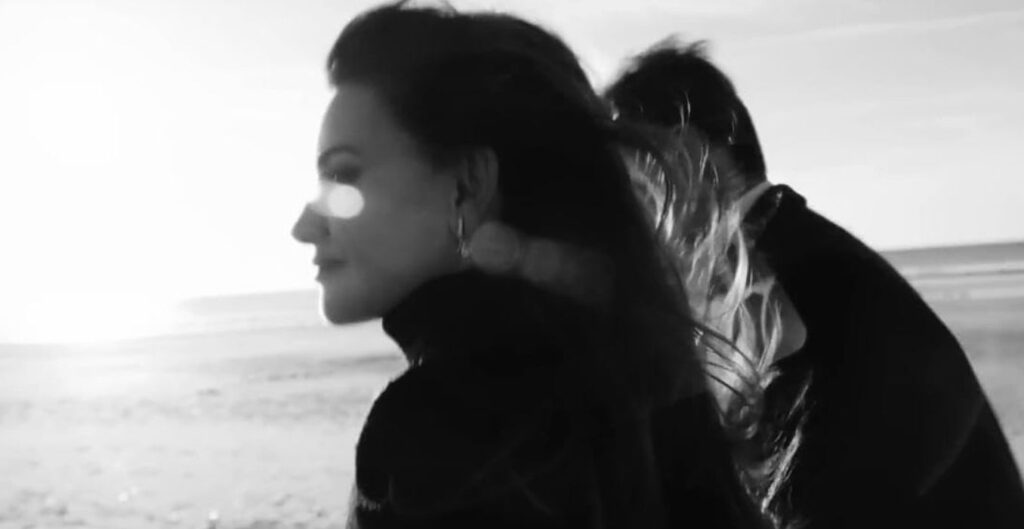
Chanel introduced its Fall/Winter 2024/25 ready-to-wear show with a French classic film, A Man and a Woman. Starring Penélope Cruz and Brad Pitt, the heartthrobs of the past and present generations, not only did this film convey brand values of the fashion house, but also hinted towards the future plans set in stone.
Alessandro Michele designed the Gucci Garden at the Piazza della Signoria. There was an inevitability about this maximalist menagerie of the Florentine fashion house, which fully gave in to the quirky illustrations, the signature prints, and oriental designs that it always associates with.
And then there is Christian Dior’s Bar jacket, one of the few iconic silhouettes in the history of fashion houses. Since 1947, its nipped waist and rounded hips have had the industry in a chokehold, thus becoming a signature across nearly eight decades.
Louis Vuitton’s recently celebrated 130 years of its monogram, the interlocking initials and the four-point stars and the quatrefoils which were designed back in 1896. It is one of the most powerful pieces of brand communication. Even when it morphed through collaborations with Yayoi Kusama and the late Virgil Abloh, the pattern still displayed the brand’s relationship.
3. The fortified walls of brand archetypes
Iconic fashion houses are a pedigree. They have to speak in a native language, born from the deepest layer of fashion branding strategy. Which archetype a fashion house inhabits, and whether that archetype is expressed with pride or cornered into vagueness, is one of the most consequential decisions in the entire brand development process.
On paper, Gucci may not fit the traditional profile of a fashion house, but that is the point! It embodies the Outlaw archetype. A house that will always go against the conventional aesthetics. From Tom Ford’s era of fun hedonism to Alessandro Michele’s geek chic and now Demna’s precise tailoring, Gucci does not seek permission from the fashion world. It assumes the right audience will always buy the products.
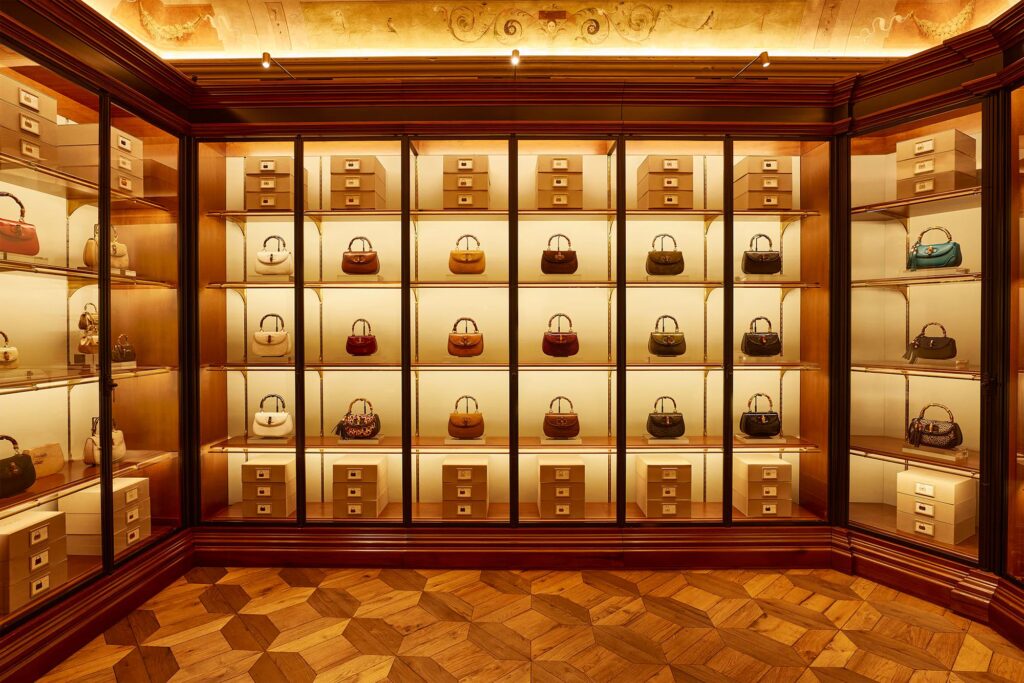
Hermès needs a creative team that understands the Sage-Jester position. The artistic director Christophe Lemaire once noted that Hermès does not want to play the fashion war game, it refuses to compete on others’ terms, and that itself is the competitive strategy. It is a brilliant example of fashion brand differentiation in the industry.
Balmain embodies the Hero. Balmain has always saved the fashion choices of its target audience, an empowered woman. And it became the house’s permanent brand purpose. Luxury fashion built on revolution is always harder to replace than luxury fashion built on heritage. Revolution has to be enacted every season, but Balmain is smart to study the brand’s luxury consumer behaviour data and act accordingly.
4. High-end competitive differentiation
A layman with poor awareness of fashion brand differentiation will miss how precisely a maison de couture owns its territory. The houses have achieved lasting competitive positioning in the fashion industry because they made the choice to be one thing completely rather than many things at once.
Hermès is a status symbol. No other brand matches its superiority in ultra-premium leather goods because Hermès has a system of controlled access. And that is a unique example of a fashion brand customer acquisition strategy. You only have a shot at purchasing a Birkin if you have a history of purchasing couture. The waiting list doesn’t mean that there is a scarcity in supply chain, but the brand has found an excellent way to generate desire that no advertising ever could.
Dior appointed Maria Grazia Chiuri as its first female creative director in its 70-year history.

It was around the time the Me Too movement exploded in 2016-2017. The feminist dialogue was the most valuable argument, and luxury consumers were demanding that high-end fashion brands take a stance.
Louis Vuitton, created a competitive paradox. With its margins approaching 40% while sustaining global desirability. LV proved that mass production can be held in tension through limited-edition drops, capsule collections, and a no-sale policy.
Prada commissioned Rem Koolhaas to design its retail environments and Wes Anderson to make its films. It was the same declaration of the brand values that was relevant in 1996 and is still relevant in 2026.
5. Blunders in marketing and their salvaging
Every fashion house has fumbled in its branding and survived long enough to understand that luxury consumers are unforgiving.
Even Balenciaga and Gucci take restraint in their bold marketing and only stretch their legs as far as the customer allows. The brands that recovered learned from their blunders and reassured their customers that they were still what they were before the crisis.
The pre-pandemic years have a reputation for introducing the most offensive ideas by fashion houses, resulting in backlash. In February 2019, Gucci launched a turtleneck sweater with an unmistakable resemblance to blackface imagery. They were forced to apologise immediately, but then, the house did something that was far better than a typical crisis PR response. Gucci appointed Renée Tirado as its global head of diversity and inclusion. It was a permanent promise from the brand that simmered the anger of riled-up customers.
That same month, Prada withdrew a series of Pradamalia figurines because the consumers identified one character as evoking the same imagery. Prada was not forgiven as well, and the fashion house had to establish a Diversity and Inclusion Advisory Council co-chaired by Theaster Gates and Ava DuVernay. Two fashion houses, two formidable forces, brought to their knees by an audience that valued accountability over anything else.
Balenciaga’s blunder was the most disrespectful. And it came in 2022, when the fashion world was chronically online and every marketing move was put under the microscope. Balenciaga photographed portraits of children holding plush bears with explicit harnesses. And the blunder was so unforgivable that the consumer world wasn’t buying into the excuses of ‘oversight and wrong choice.’
Creative genius is dispensable, that is, no individual’s genius is worth more than the brand’s integrity. Balanciega had to recover from the crisis with legal action, public accountability, and internal restructuring, and then gained customers’ trust again with a disciplined strategy.
6. Phygital brand strategy
Some brand owners often contemplate that the centuries-old fashion houses had it easy. That they were the pioneers, they had no competition, and the lack of digital networking kept the saturation threshold low.
Indeed, the brand dilution risks in luxury world are greater than ever. But there is an opportunity only a few fashion houses are tapping into: Phygital. The intersection of physical and digital. The blur between cinematic visuals and physical fashion.
A digital brand strategy fashion houses could actually use looks nothing like the playbook that worked for every other category. The rules of luxury fashion media strategy are the opposite of conventional digital marketing. The trends shaping how this plays out in the current market are worth understanding in their own right, and our blog on what is happening in luxury fashion in 2026 gives a better explanation.
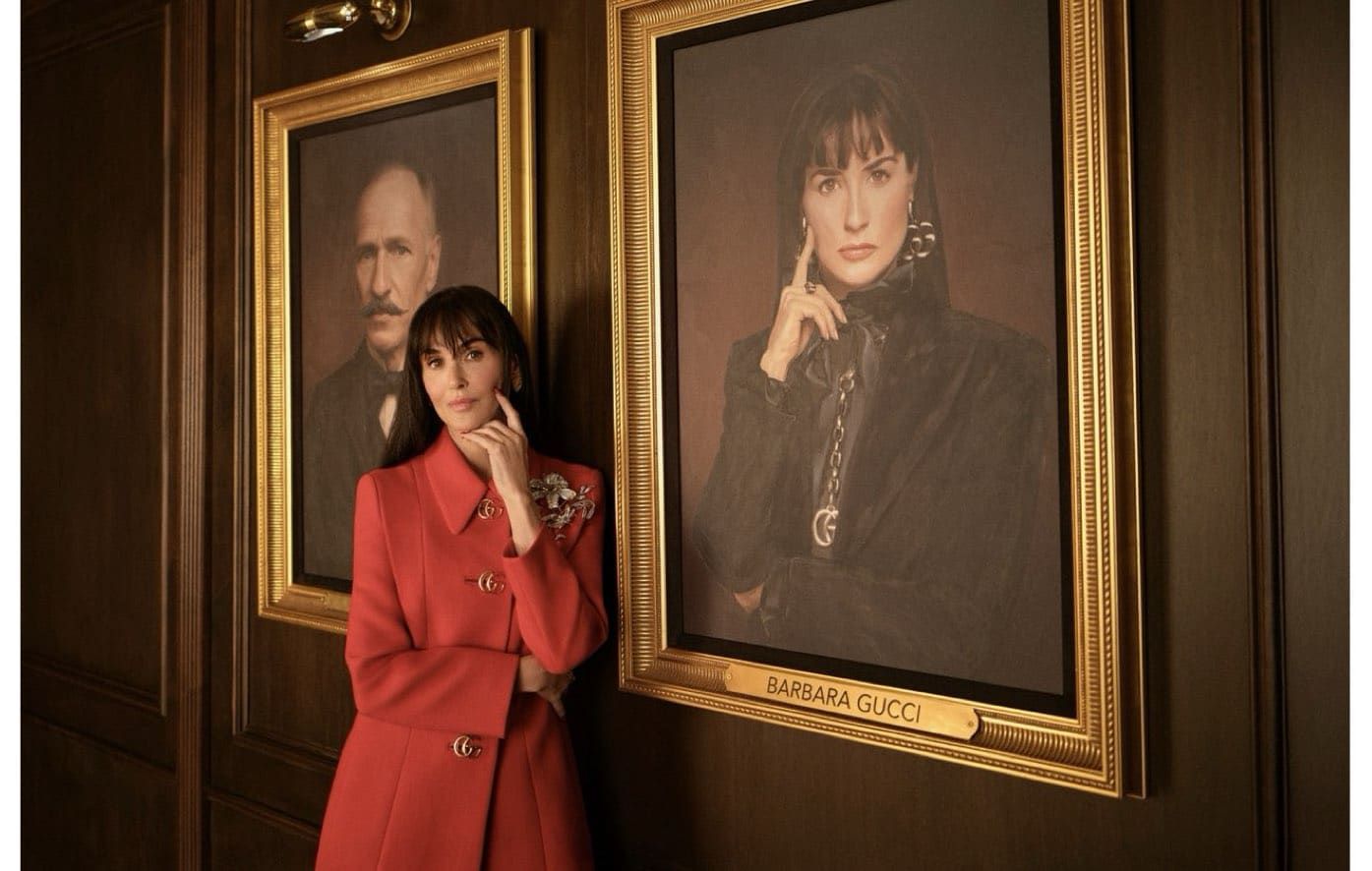
Gucci’s lookbook ‘La Famiglia’ didn’t appear on a runway. At the Milan Fashion Week, everyone would’ve assumed the models would dapple in the latest designs and run another fashion show. But the cast of Gucci’s debut film, The Tiger, wore their looks to the premiere instead. This is a prime example of Phygital branding secret that many fashion houses practice these days.
To take it a step further, the artistic work of building luxury conviction into a website is where the real Phygital strategy begins.
Which New Luxury Brands Are on Their Way to Becoming Future Fashion Houses?
The next generation of maisons is not from Paris or Milan. They are born from ateliers in Mumbai, Seoul, Lagos, São Paulo, Jakarta, and other regions. Rooted in their indigenous founding stories, they are on their way to becoming the next generation’s fashion houses.
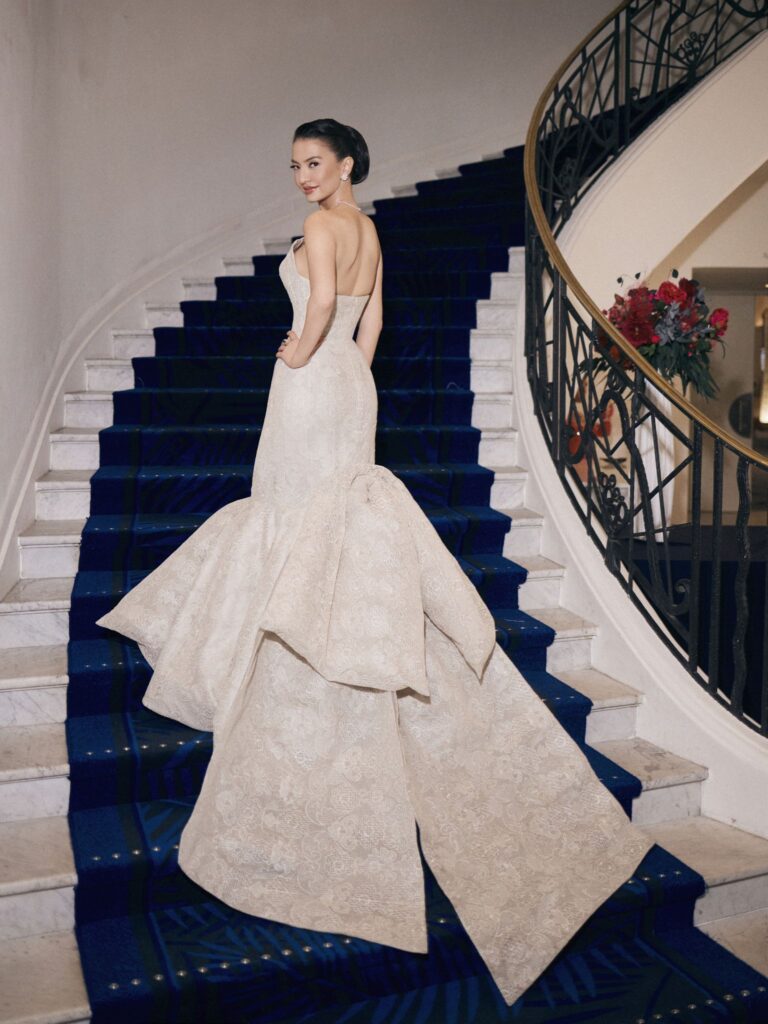
Rahul Mishra
Rahul Mishra won the 2014 Woolmark Prize at Milan Fashion Week, an accolade previously claimed by Giorgio Armani, Yves Saint Laurent, and Karl Lagerfeld. He has become the only Indian designer to do so. The brand is now collaborating with Tod’s, to create an international maison from a non-Western foundation.
Sapto Djojokartiko
At Jakarta Fashion Week 2025, Sapto Djojokartiko told everyone what it means to wear Indonesian heritage. Flaunting the textures of the archipelago, the gold threads and lace, Sapto Djojokartiko met the standards of Paris Fashion Week in its very soul.
Anamika Khanna
Anamika Khanna’s AKOK line is inspired by the Bonda tribe, which is one of India’s most isolated communities. The fashion line was launched at Saks Fifth Avenue in New York. A luxury fashion brand that is rooted in indigenous Indian culture checks all the boxes of competitive advantage. The brand is also bold enough to blatantly reject imitating Western aesthetics.
The Row
The Row is made for those who “don’t need to show off their purchases.” What extraordinary deviation for a fashion brand! It will not sell by advertising or shows, but by discernment. And the ultra-high-net-worth individuals, including billionaires and centi-millionaires who now represent 30-40% of luxury spending, are willing to follow its new rules.
Conclusion
The secret behind every iconic fashion house starts from the basics: what the house stands for, who it is for, and what it will never compromise. But then it blooms into renewed plans and deviations from norms.
Every fashion house has a history of stumbling over its own shoelaces or launching marketing tactics that generated even more revenue than expected. But 6 secrets, that we have just discussed, work for every fashion brand, in their own way.
We build layers of branding for businesses in fashion, which later becomes a strategic and unforgettable asset for them that gets stronger every day. If you’re starting a journey towards luxury fashion, or are awestruck by existing brands and don’t know where to start, we’d love to talk about what we can do for your brand.