
Eight Trends Shaping the Global Luxury Fashion Industry in 2026
Eight trends emerge from the global luxury fashion market, showing brands must master unforgettable narratives, fashion store experiences, & bold identities to justify their values in 2026.
The global luxury fashion industry in 2026 is standing at a pivotal turning point. Shake-ups in the marketing strategies of even major fashion houses, like Bottega Veneta, Dior, and Chanel, have coerced analysts to examine luxury market transformations. Turns out that the renewed energy, heritage tapping into timeless styles, and new visions have gained traction amongst luxury shoppers.
High-net-worth individuals have reached a phase where yearning is no longer about more stuff, but about feeling more, which presents a new kind of challenge for fashion brands.
So, where do the opportunities lie?
Eight key luxury fashion industry trends, revealed by Global Bay, define how successful luxury brands create extreme value in today’s market. These trends reflect not only momentary infatuations but also deeper meanings in how consumers associate meaning and trust. Brands that have a sense of what’s happening around them thrive. Those that fail to adapt to these trends risk long-term growth, even if surface demand appears stable.
8 Trends Driving The Luxury Fashion Industry In 2026
The next phase of growth for the global luxury fashion industry will be uneven and selective. Such structural trends in consumer behaviour reveal that the fashion industry, which relies on products alone, cannot attract with volume logic or price escalation anymore.
What the global fashion industry needs is relevance and interpretation. For example, between 2018 and 2023, female-controlled assets grew faster than the overall market. Industry players must capture growth opportunities presented by this rising share.
This blog examines eight industry trends that force luxury fashion brands to ask sharper questions: Beyond expensive assets, what other things do people find attractive? Where does it make sense to stretch global luxury fashion’s future growth?
1. Bringing Back Alienated Customers After Years of Aggressive Inflation
The era of 2026’s luxury fashion shoppers is exhausted of big European luxury brands and their aggressive price hikes. Post-pandemic years have finally alienated aspirational consumers in the UK, US, and elsewhere.
But now, the inflation is winding down. Big luxury houses are no longer allowed to demand prices in the double digits. And the space left by them is quickly being filled by groups like Ralph Lauren and Burberry, which are winning back the trust of aspirational customers by offering better value for money.
So, one of the opportunities for luxury fashion brands in 2026 lies in providing oxygen to consumers. Offer accessible alternatives, like Polène, Coach, and Tapestry are doing, and look at how they are growing strongly.
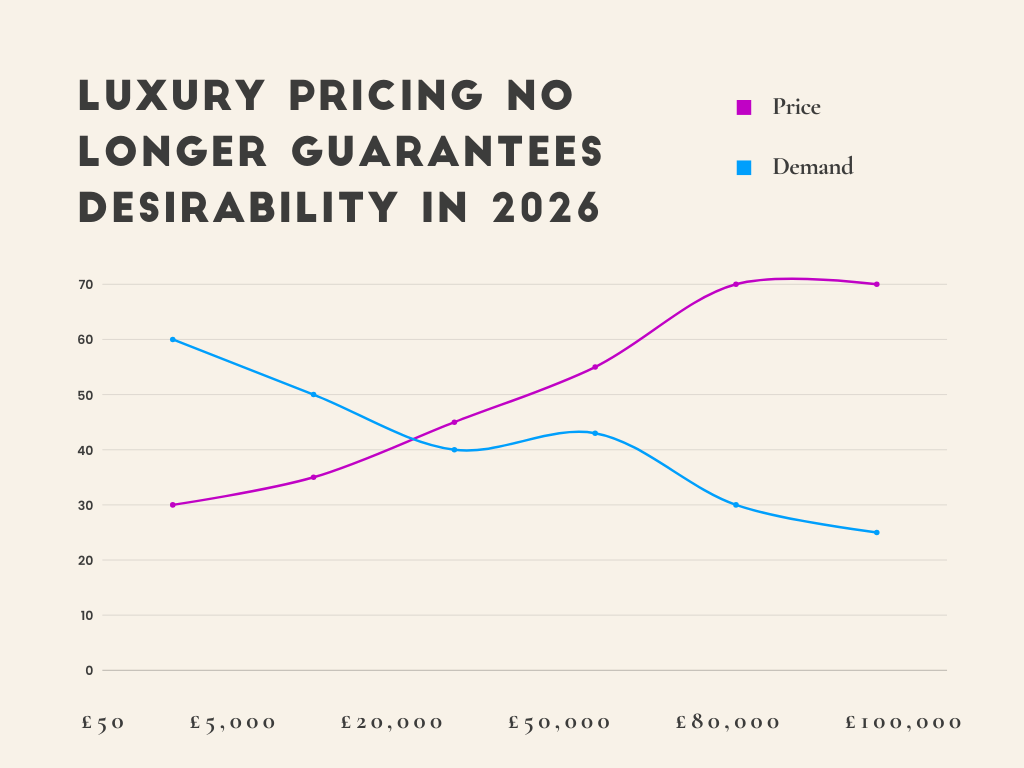
Benefit from the white space created by luxury giants, who have lost authenticity due to greedflation. Their prices are not justifiable. It is one of the reasons why local Chinese brands are rapidly growing in a price-sensitive market, because they offer better value for money.
Brands that regain trust of luxury fashion shoppers in 2026 are those that identify cultural tensions, respond to them, and offer relief beyond margin logic. Luxury agencies like Global Bay focus on translating consumer logic into credible digital experiences, which is why they are increasingly involved in strategic repositioning of luxury fashion brands in the global market.
2. Younger Shoppers Greatly Disregard Cultural Influence
Gen Z and younger Millennials do not yet dominate luxury revenue, but they dominate cultural momentum. They legitimise or discredit brands based on tastes and values, and now exceed their share of wallet.
Younger consumers are not financially secure, but they would still splurge on lower quantities or smaller pack sizes. This is why luxury is now treated less as possession and more as reputation within social systems.
These trends have forced luxury fashion brands in 2026 to focus on visibility, narrative, and symbolic coherence more than permanence. For younger audiences, a brand’s website makes it stand out from a thousand competing narratives. Only luxury branding, which is rooted in compelling narratives, can make people feel something. Fashion brands must choose a point of view and make it so bold that it pierces through cultural fog and gains the attention of young consumers.
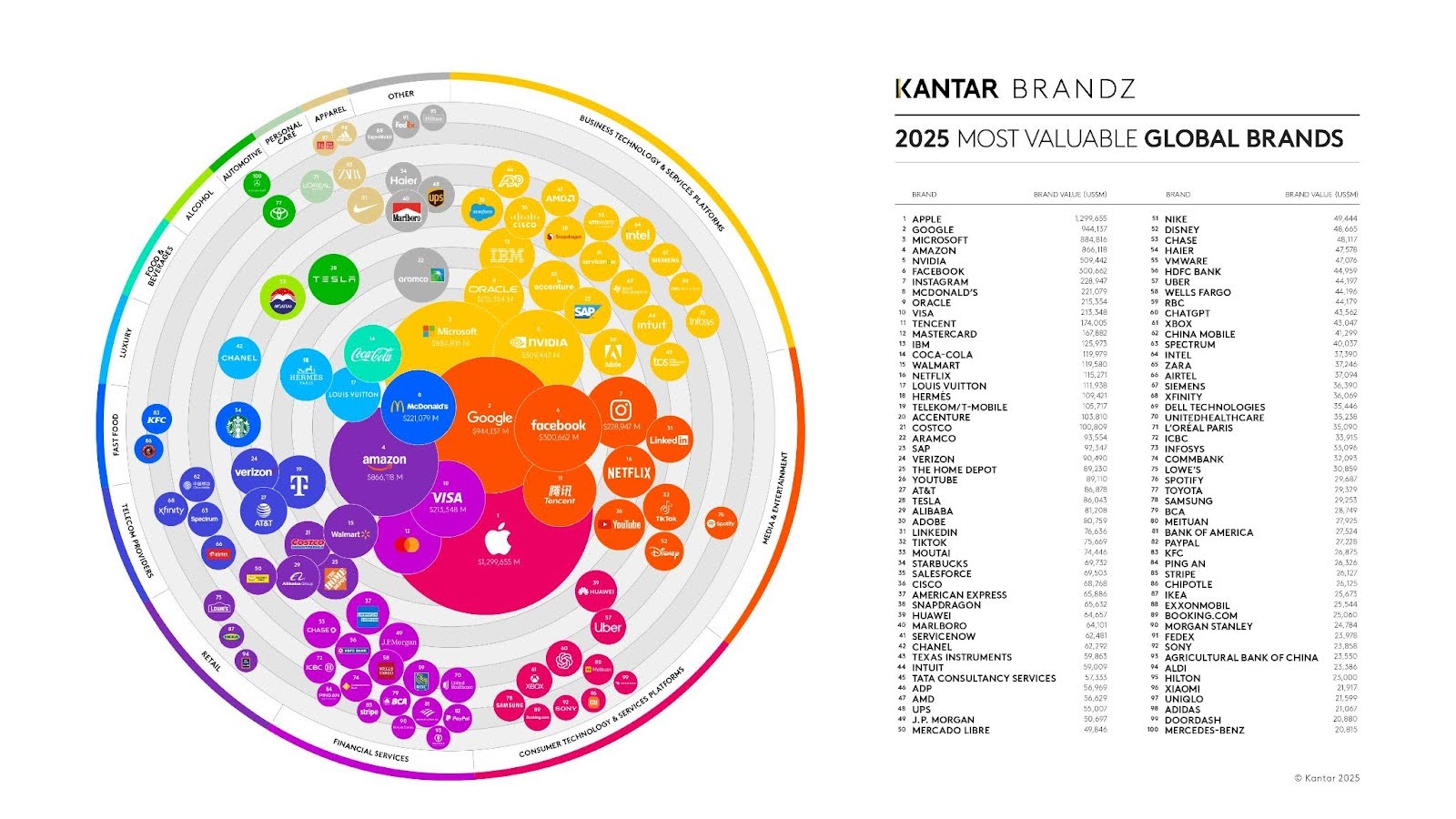
Uniqlo exemplifies this approach. In an industry dominated by men’s, women’s, and kids’ clothing, Uniqlo focused on quality basics, which invited Asian and European customers to approach their individual style with ‘Made for All’ branding. Uniqlo has grown with a 43% year-on-year increase and is listed in the world’s most valuable brands as per a recent Kantar report.
Hence, abandoning branded monologues and embracing human traits like vulnerability can tell stories that create a stir in younger luxury fashion consumers.
3. Luxury Fashion Store Experiences Will Be a Big Thing
Even when macroeconomic uncertainty led to sustained price elevation, the market for luxury personal goods held relatively steady. It reached €364 billion in 2024, and the sales were forecast to total €358 billion in 2025.
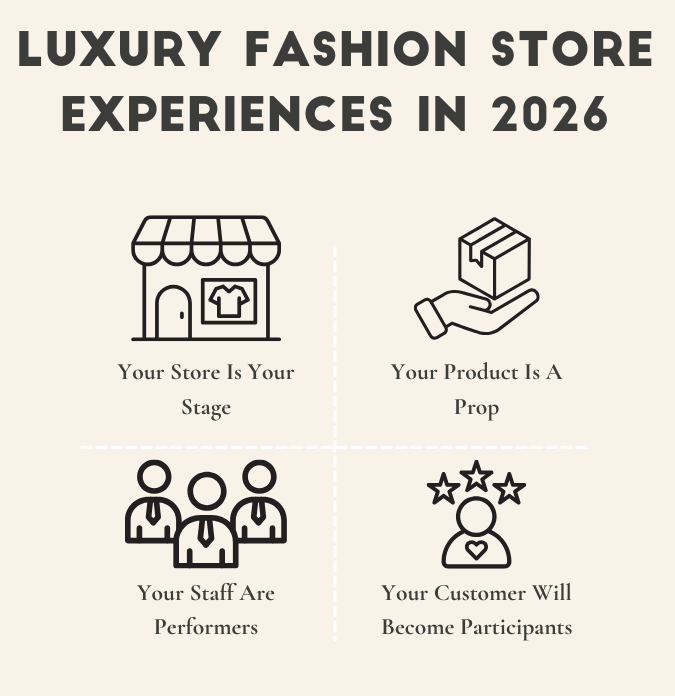
It was also noted that luxury experiences were gaining ground on product ownership, driven by feelings of rewarding oneself and social connection. Which brings us to luxury fashion store experiences that offer meaningful ways to materialise brand stories. Three points are shaping the global luxury fashion industry trends;
Number one, the physical fashion stores are orchestrating experiences to elicit sensory, affective, social, and cognitive responses from customers. Digital channels also provide a differentiated platform to improve the luxury customers’ experience.
Number two, the luxury fashion store experiences are defined as when a brand uses its services as a stage, and products as props. In this way, they can engage targeted customers with convenient, immersive experiences.
From Dior’s La Galerie to the Met Gala and the Chanel Culture Fund, luxury brands are creating artistic expressions to create a cultural momentum. Luxury is no longer considered eccentric but rather a restoration of pain points,
And number three, high-net-worth customers increasingly prefer experiences that promise evolution. Thematic spaces can tell brand stories just like Anya Hindmarch’s Village does. The workshops add a touch of personalisation to every product, which encourages customers to interact with the brand while feeling exclusive.
4. Virtual Craftsmanship and AI Influences Everything
The luxury fashion industry is built on timeless craftsmanship and heritage. However, once a giant, unassailable entity, it now stands at a pivotal juncture because in 2025, we saw a softening market. Luxury fashion brands are torn between nourishing their legacies and facing towards the future.
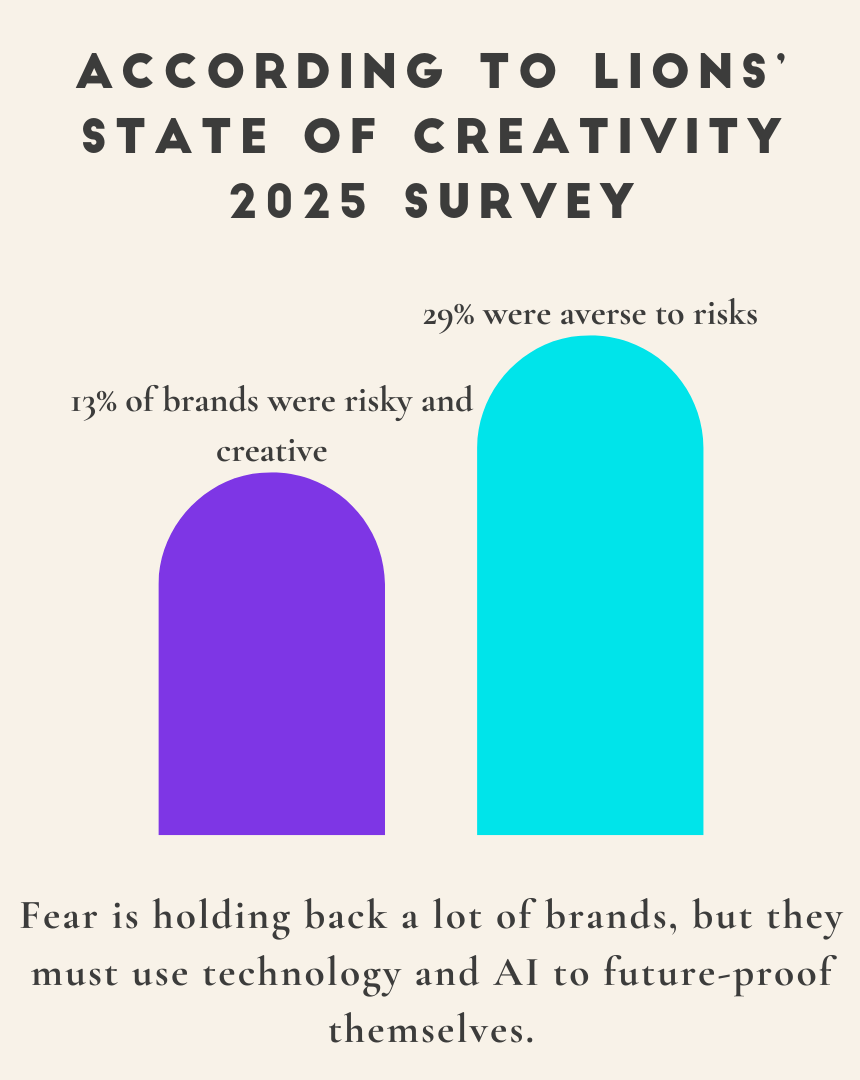
Fear is holding back a lot of brands. According to State of Creativity’s report by Lions Advisory, only 13% of brands were risky and creative, while 29% were averse to risks.
Brands need to understand that technology is a co-pilot. Louis Vuitton is the most valuable luxury brand worldwide. It is creating a program to use generative AI that will create ‘thank you’ messages. The tone will be tailored to every client’s profile, while sticking to the original tone.
The luxury consumers of the fashion industry expect brands to meet them on their devices, via offline experiences, online services, and virtual worlds. They are willing to tolerate AI when it feels relevant, and resist it when it feels impersonal.
Brands working with agencies such as Global Bay are prioritising personalised clienteling, AI-generated experiences, and using other innovative strategies to connect with their audiences in 2026.
5. Influencers, Celebrities, and Brand Authority Take Center Stage
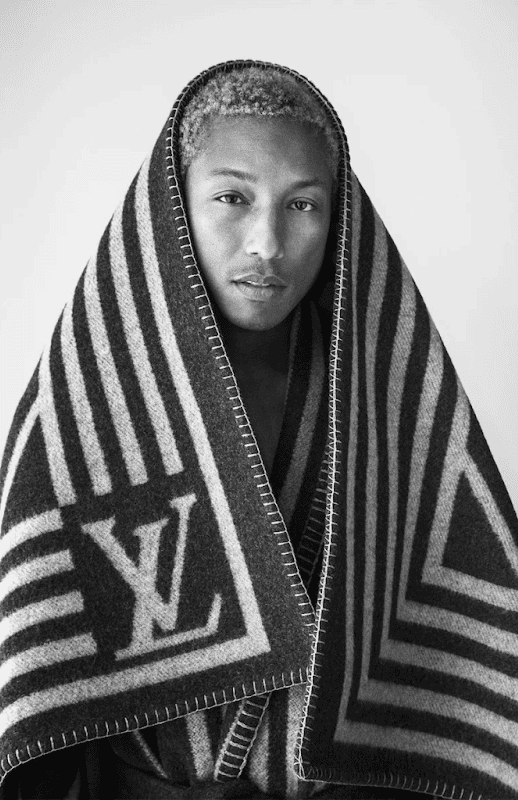
Louis Vuitton also became the first luxury brand to appoint a global figure to lead its menswear line, Pharrell Williams. Over the past decade, many fashion brands in the luxury industry have moved quickly to collaborate with their favorite influencers and celebrities, and the trend is expected to catch fire this year as well.
These moves signal not only the power of influencers and celebrities on luxury fashion marketing but also the broader trends to gain market share and compete with the fashion giants.
Micro accounts – small influencer accounts – are now as profitable for marketing as famous celebrities or internet personalities. This is because it is in human nature to trust someone and connect deeply with them when they sound and look similar to you.
Madeleine White started on TikTok, posting her sewing videos, and kept going viral until she became one of the richest influencers who now collaborates with high-profile fashion brands. Brands that work with her see excellent results. By investing in influencer marketing in 2026, your brand can also promote your products to young audiences.
6. Brands Must Create a Bold Identity to Pierce Numbness
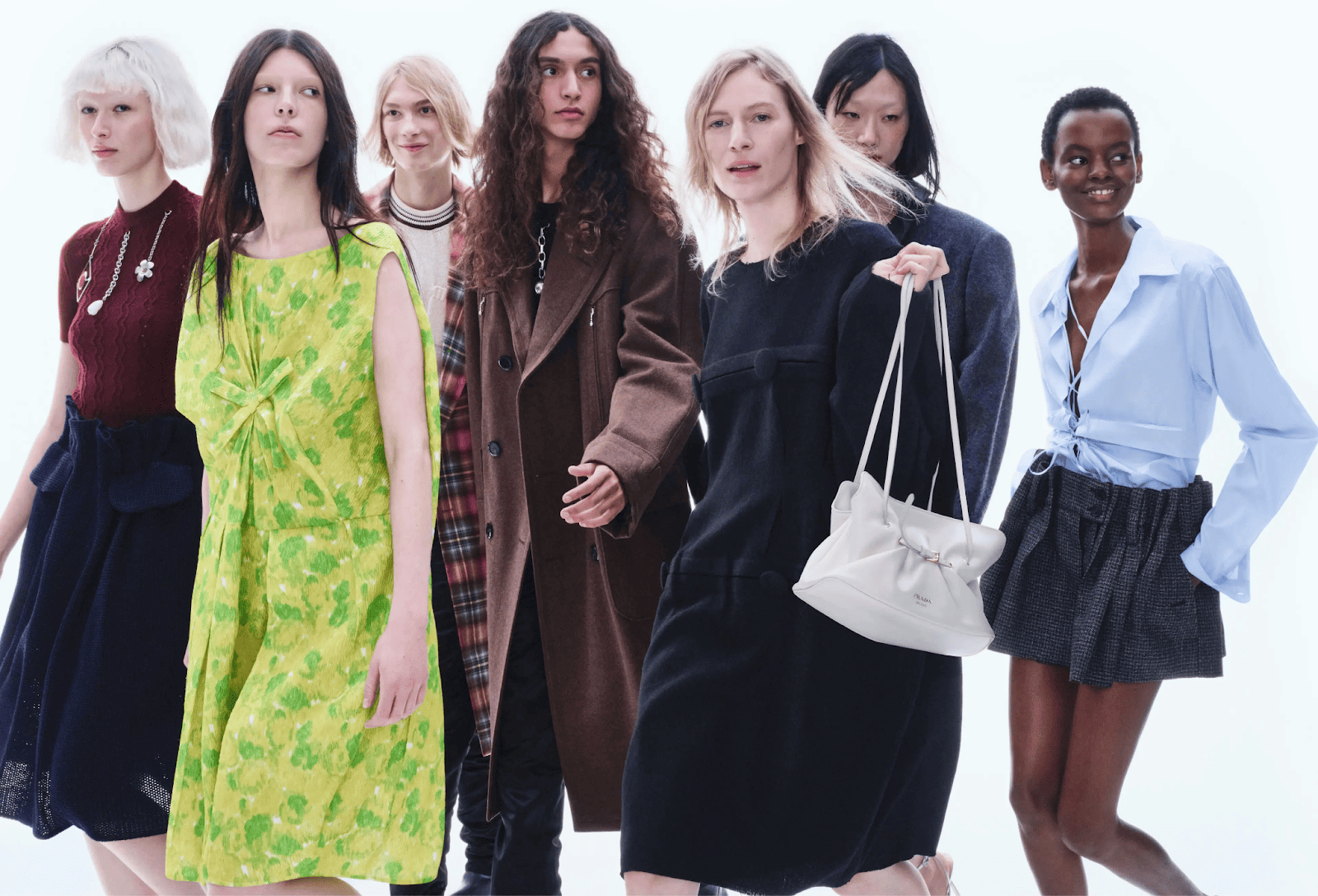
In this era, everyone has a short attention span. Between the doom-scrolling and speed-watching, the thumbs only stop when a particular brand grabs a consumer’s attention. Many brands created bold, sometimes controversial ad campaigns in 2025, which delivered their message even to those who weren’t always chronically online.
Such examples include American Eagle and Sydney Sweeney’s collaboration and Coca-Cola’s second AI commercial after last year’s backlash.
These ads were controversial, but they were memorable. People stopped to look at them again and again, sometimes to criticise and sometimes to find mistakes. Despite a little backlash, these brands stood behind their campaigns, looking at the bigger picture – that their message was worth every penny that they invested.
However, American Eagle still couldn’t rise to its target of YoY growth. Which proves that marketing is a two-way dialogue, and consumers’ viewpoints always have the final say.
But with the bottom of the funnel becoming saturated, it is very important to differentiate your storytelling, creativity, and Jungian archetypes to get consumers talking. As the luxury fashion industry shifts towards meaningful storytelling, brands in 2026 are shedding their lowbrow images and expanding their personalities.
7. Resale, Or the Second-Hand Market
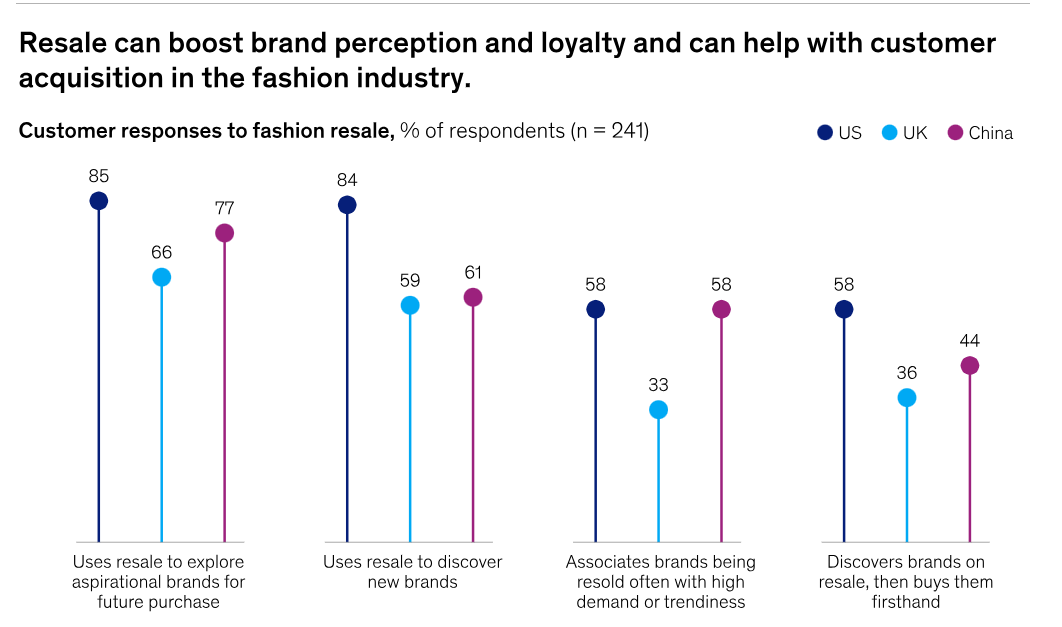
The global economic uncertainty has created a backdrop for the luxury fashion market. There is a clear revival of maximalism, which is more a response to uncertainty rather than a consumer trend. Luxury shoppers, especially Gen Z, want a sense of abundance to balance their emotional stress and constraints.
However, there is also a clear dislike of unjustifiably high prices among such shoppers, which brings us to the seventh luxury fashion market trend in 2026 – resale, or the second-hand market.
Several luxury brands are quick to respond to the resale market, which is forecasted to grow up to 3 times faster through 2027, as compared to the first-hand market. These brands are undertaking deliberate efforts to build emotional bonds with their existing shoppers, signalling ways of loyalty with accessible price points.
As luxury shoppers grow more aesthetic priorities to serve emotional functions, and the resale market outgrows firsthand purchases, it is becoming crucial for luxury fashion brands to connect with the moment and branch out into adjacencies suitable to their messaging.
8. Gold Consumption Reaches an All-Time High
Gold could hit $5,000 / ounce in the first half of 2026. Everyone is desperate to buy gold, even if they cannot buy their necessities.
This is because gold is considered a store of value, and today’s luxury shopper is wise about their investments. Gold doesn’t lose its value – a Lamborghini or Bottega Veneta might. So, what’s in it for the luxury fashion brands in 2026?
While gold is becoming a breakout success for brands, they should focus on unique designs and timeless craftsmanship to create a strong market appeal. Gold consumption is soaring, and domestic brands can leverage this opportunity to attract global capital. For example, Kering Group made an investment in December 2025 in a high-end gold jewellery brand in China. The said brand, Baolan, was connected to imperial gold-making techniques.
So, anchored in Chinese tradition, the domestic brand made a clear-cut breakthrough in the global luxury landscape just because of the surge in gold consumption among luxury consumers.
What this means
The future of the luxury fashion industry in 2026 lies not in surface-level trends, but in cultivating context, reading consumers’ minds, and predicting what comes next. Fashion brands that will pause, detour, and cut through noise will create extreme value among consumers.
The eight luxury fashion industry trends represent a shift in consumer mindset. It is a call for fashion brands to move away from reactive branding and create strategies with cultural intelligence.
Global Bay, a digital luxury agency, offers bespoke services for high-end fashion brands. We know how critical the ability to innovate is in 2026, especially for the luxury fashion brands in this saturated industry. By evolving into something human and intentional, you could become visible and stay close to your consumers without chasing them or coming off as too desperate.