
Global Bay Marks 13 Years: What More Than a Decade of Digital Luxury Branding Has Taught Us About Brands Built To Last
Global Bay was founded thirteen years ago.
This was when luxury brands, especially those with centuries of heritage, were notoriously slow to step into digital channels. They were hesitant to accept that the internet would carry the weight of their identity, and that they would have to be findable and legible on a few-inch screen.
When Global Bay was founded in 2013, we understood, even then, that digital would be the most necessary amplifier to luxury and that a simple brochure website would not suffice the rigorous and modern era that was to follow.
We have witnessed every major inflection point in the luxury market. The shift from static web to social media, the pivot from websites to mobile-first indexing, the post-COVID reconfiguration of the global luxury e-commerce, and the emergence of generative AI as a mediator between brands and the customers who are searching for them.
Rather than holding onto older ways, we helped our clients reap benefits from all these changes, and along the way, our own agency has been awarded multiple times for the quality of that work.
Four Elite Recognitions Highlight Our Powerful Thirteen-Year Legacy
Over thirteen years, Global Bay has learned that consistency, sustainability, and design excellence help luxury brands survive. Industry bodies noticed this, earning us four of the industry’s highest honours.
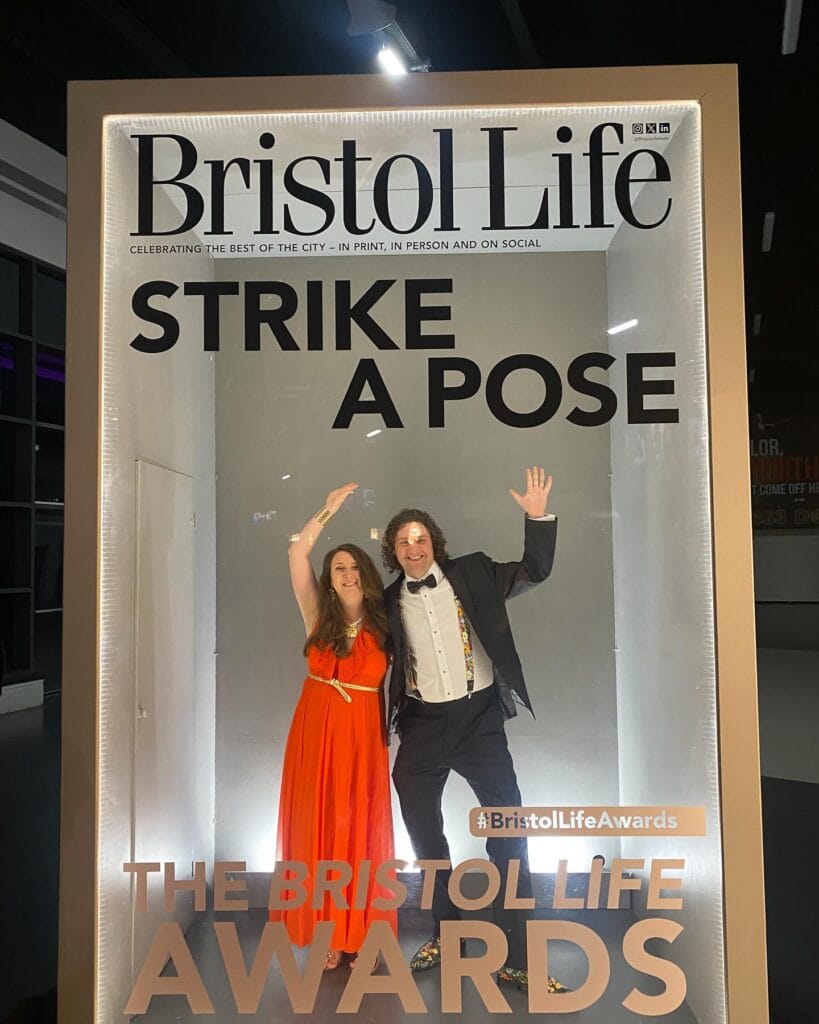
In Bristol, two consecutive finalist spots at the Bristol Life Awards (2025, 2026) proved our local impact. Internationally, the Luxury Lifestyle Awards (2026) recognised our sustainability leadership, while Lux Life Magazine named us Best Sustainable Digital Agency the same year, recognising our green web hosting that has helped our clients avoid over 170 tonnes of CO₂e. And when it comes to design, Corporate Vision’s 2025 award for Best Luxury Digital Design Services in the UK affirmed what our clients already know, that referrals come when the work exceeds expectations.
“We have never had a client refer us because we were professional,” Jon Basker notes. “Every referral we have received came from a moment when our work was beyond what the client thought was possible.” Alongside Jon, the agency’s work is shaped by a close-knit team that oversees client services, project management, and the operational backbone.
The Secret To A Lasting Luxury Brand Comes Down To Three Things
After thirteen years, we have seen three branding traits that appear in each and every one of thriving luxury businesses, though never as predictable as you’d imagine: instead, what separates brands still standing from the ones quietly losing ground is a series of representations of aesthetic discipline, cohesive narrative, and investments in experiences.
Let us talk about them one by one.
The first is aesthetic discipline. Luxury brands cannot waste their time experimenting with their representation. No, they must collapse into one type of self-expression. When a consumer identifies with a certain aesthetic, like vintage fashion, holidays spent on luxury yachting, local hospitality with conservative, cultural taste, or high-end decor and furnishings, they use this aesthetic as a lens through which they judge brands. Be a brand with strict aesthetic discipline that acts like a readymade template.
However, aesthetic discipline erodes when too many people offer their input instead of following a singular vision, for example, we have seen technical teams interfering in creative vision. The moment it happens, the discipline is already gone.

Similarly, narrative coherence disintegrates when brand image is managed reactively rather than proactively. One bad campaign shouldn’t shake the foundations of a luxury brand. Mishaps happen, but that doesn’t mean the brand’s response should be purely reactive.
Proactive, visionary management helps a brand last in a volatile market. A cohesive narrative builds a loyal audience, and it makes them pay more, forgive your mistakes, and sell out your launches in minutes. An ownable brand presence, an archetype, is what makes a brand last. Some offer community, some offer privacy, and some offer a positive impact on planet Earth. But every luxury brand must stand for something, rather than nothing.
The third is a willingness to invest in both tangible and intangible experiences. There is a transformational opportunity in using user data, AI, and personalisation, and brands that utilise them to meet high-net-worth customers where they are, build a loyal clientele.
The luxury brands that sustain their position over time have found ways to protect all three characteristics, understand what is at stake, and know how to defend their standards.
The Real Work Looked Completely Different Than We Expected
Thirteen years of luxury digital marketing and branding have taught us to build around what the client’s customer needs, not what the client needs. A few things clearly stood out to us.
A defining change of the past decade in the digital luxury niche is the focus shift from product-led to experience-led branding. Brands that built their sites around product specifications had to relearn that high-net-worth consumers do not respond to hard-sell and high-pressure marketing. They want to know what company they are investing their money in, who else is buying it, what the after-sales looks like, etc.
Luxury brands nowadays are obsessing over visibility in large language models, completely forgetting that it is only a mere point of contact and the real conversion happens on a website. LLMs will tell them the price. But the customer will never buy from you unless they’ve seen how professional your website is.
Another metric that must come to your attention is that at 0.72%, luxury & jewellery is the lowest-converting e-commerce vertical of 2026. How narrow does that make the gap in digital branding!
Our core team attributes this low percentage to a consumer’s need for extreme brand reassurance and secure payment options. The consideration period for luxury purchases is long, especially when it is an online purchase. This is both an opportunity and a need-of-the-moment for brands to invest in their websites more than ever.
A Luxury Website or Rebranding Project Needs Few Things From The Very Start
… and one of them is reassurance. In fact, it is the first ever thing that should be present in a luxury website. Whenever we take over a web redesign or rebranding project, we consider three things. Is the message making the purchase or journey feel comfortable for the client? Do the promises made justify the price point? Can the website carry as much proof/case studies/photographs/videos as possible without weighing down?
Pure PPF had over 700 clients. They had built a strong reputation across Bristol’s luxury automotive market. But their site was not answering any of those questions. Tell us, then, how were they supposed to convince outside customers — those who were not within their direct referral circles?
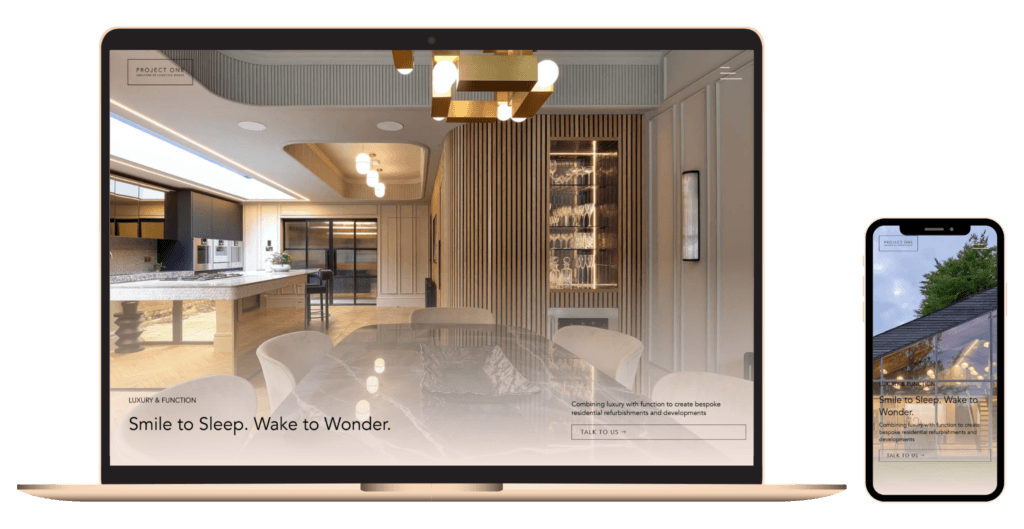
Similarly, Project One ran into a similar problem. An award-winning design and build collective, yet it was still running on a Squarespace template that couldn’t carry the weight of HD images and case studies of multi-million-pound residential projects. We rebuilt the site from scratch. Organic traffic immediately rose 16% and engagement, 25%. They could’ve acquired clients with UHNWIs’ proximity and brand partnerships, or referral networks, but a professional website had to stand there as a portfolio, like a north star, otherwise no conversions would take place.
If either of those situations sounds close to home, that’s usually the point where an expert consultation call is needed.
Another habit we have developed over the years is providing small offerings at the highest standard. A modest initial project – a content audit, a UX review, or a targeted SEO audit – sometimes becomes the foundation of a long-term relationship with our clients.
The same applies to luxury brands. When a customer sees that a brand brings the same level of care to a contained project, like humbleness at the point of sale, or a personalised apology note that goes out with an exchanged product, as it brings to a flagship campaign, trust is established.
Lastly, communication and reliability have always been one of the most critical factors in our client-agency relationship. We have communicated with our clients with precision, delivered work with commitment, and flagged problems before they caused problems.
We will continue to practice these structural changes going into our fourteenth year of operation, because we understand how impactful this trust-tension balance is on client retention.
The Luxury Market Has Moved & The Buyer Isn't Where You Think They Are Anymore
The biggest shift we’re watching right now is where the research phase of a luxury purchase is headed.
A Bain & Co. study has found that 82% of very heavy luxury spenders had used AI during a purchase, against 67% of heavy spenders, 51% of moderate spenders and 28% of light spenders. Luxury brand owners think that high-net-worth and ultra-high-net-worth individuals do not use AI tools. But the survey says that the customer who has the most money is more likely to have asked an AI model to shortlist your brand.
| Spend tier | Used AI during a recent luxury purchase |
| Very heavy spenders | 82% |
| Heavy spenders | 67% |
| Moderate spenders | 51% |
| Light spenders | 28% |
Apparently, it is a language model’s job to point them in the right direction, and a language model is only as reassuring about your brand as what it can find and trust about you.
ChatGPT has reached roughly 900 million weekly active users by February 2026, more than double the figure from a year earlier, and Gemini’s reach is also running into billions monthly.
Getting your brand visible inside those AI-generated answers is a place where a smaller, smarter brand can outrank a bigger name that hasn’t caught up with digital strategies. Control your narrative and build authority through your website. According to an updated Ahrefs analysis, 36.7% of pages cited in AI Overviews don’t even rank in the top 100 search results. That’s a different game to the one most luxury marketing teams were trained on.
Jon Basker Shares His Raw Perspective on Where We Go From Here
“Thirteen years is long enough to understand the wisdom behind this pattern. We’ve watched other agencies confidently advise luxury clients to prioritise volume of work and trends over quality, and I have watched the same clients who took that advice work harder than ever to recover their brand positioning from pitfalls.
Truth is, your digital presence must meet the same standard as everything else. It should always focus on solving the problem of the consumer. Global Bay was built on this very insistence, and we will never negotiate on this practice or suggest shortcuts to our clients that damage their brands in the long run.”
Luxury brands are a part of a market they cannot control. Consumer behaviour, AI models, buyers’ research: they keep shifting the tides. But you can control what happens inside your own edges. Maintain branding discipline, keep a great story to tell, and be honest in the claims you make. The growth that comes after will be something to behold.